
Re-examining Childhood Attention, Human Potential and the Forgotten Wisdom of Ancient Indian Yogic Science
Dr. Saurabh Katiyar, PhD
An interdisciplinary narrative review integrating neuroscience, evolutionary biology, philosophy of medicine and classical Indian approaches to cognition.
Abstract
Human cognition is characterised by extraordinary diversity in attention, memory, intellectual processing, emotional regulation and behavioural expression. Yet modern educational and clinical systems frequently assess children against standardised developmental and behavioural expectations.
Attention-Deficit/Hyperactivity Disorder (ADHD) occupies a particularly contested position within this landscape. Although substantial scientific evidence supports ADHD as a clinically meaningful neurodevelopmental condition, increasing diagnostic recognition has generated important questions concerning overdiagnosis, medicalisation, environmental influences, diagnostic boundaries and the psychological consequences of labelling children.
This review critically examines the distinction between neurological impairment and natural cognitive diversity, drawing upon contemporary ADHD research, evolutionary biology, developmental psychology and classical Indian models of cognition.
Particular attention is given to the yogic concepts of Buddhi, Ahankara, Manas and Chitta, alongside traditional practices such as Abhyasa, Vairagya, Dharana, Dhyana and Pranayama.
The review argues that human cognitive differences should neither be automatically pathologised nor romanticised at the expense of children experiencing genuine impairment. Instead, it proposes an integrative framework encompassing rigorous diagnosis, individual developmental context, environmental adaptation, appropriate clinical support and empirically evaluated contemplative practices.
The overarching objective is to reduce unnecessary medicalisation and diagnostic stigma while expanding the opportunities available for every child to develop attention, confidence, self-regulation and individual capability.
Keywords: ADHD, cognitive diversity, neurodiversity, medicalisation, Indian Knowledge Systems, Yoga, neuroscience, consciousness, childhood development, attention regulation, evolutionary adaptation.
1. Introduction: When Human Difference Becomes a Medical Diagnosis
Every child enters the world with a distinct biological inheritance, developmental trajectory and capacity to learn, adapt and experience life.
Some children demonstrate sustained concentration in structured environments. Others exhibit intense curiosity, physical energy, spontaneous exploration or highly variable attention depending upon their interests and surroundings.
Such diversity is a fundamental characteristic of human development.
Yet modern educational systems have increasingly institutionalised uniform expectations concerning classroom behaviour, learning pace, sustained attention and academic achievement.
Within these environments, children who struggle to remain seated, sustain attention during repetitive tasks or conform to conventional learning methods may attract clinical concern.
This raises an important philosophical and scientific question:
At what point does natural variation in human attention and behaviour become a neurological disorder?
The question is particularly relevant to Attention-Deficit/Hyperactivity Disorder.
ADHD is recognised by major diagnostic systems as a neurodevelopmental disorder involving persistent patterns of inattention and/or hyperactivity-impulsivity that interfere with functioning or development.
Extensive research supports its clinical validity. Genetic studies, longitudinal investigations, epidemiological research and controlled treatment trials collectively demonstrate that ADHD cannot reasonably be dismissed as an entirely invented condition.
A major reference is Faraone et al. (2021), The World Federation of ADHD International Consensus Statement: 208 Evidence-based Conclusions about the Disorder, Neuroscience & Biobehavioral Reviews.
Nevertheless, the legitimacy of ADHD as a clinical construct does not imply that every diagnosis is necessarily accurate or that every behavioural difference warrants medical intervention.
Kazda et al. (2021), in a systematic scoping review of 334 studies published in JAMA Network Open, identified convincing evidence of overdiagnosis and overtreatment among children and adolescents, particularly highlighting uncertainty surrounding the balance of benefits and harms for those with milder symptoms.
Therefore, two distinct propositions must be considered simultaneously.
First, ADHD can represent a genuine and significant source of functional impairment.
Second, diagnostic practices may sometimes classify context-dependent developmental or behavioural differences as psychiatric pathology.
A scientifically responsible framework must examine both possibilities.
The purpose of this review is to investigate that boundary and explore whether classical Indian knowledge systems can contribute to a broader understanding of attention, self-regulation and human development.
2. The Evolution of ADHD: From Behavioural Observations to Neurodevelopmental Classification
The clinical history of attention-related and hyperactive behaviour extends well beyond the past several decades.
Modern ADHD emerged through successive diagnostic categories, including childhood hyperkinetic reactions, attention deficit disorder and subsequently attention-deficit/hyperactivity disorder.
These changes reflected developments in psychiatric classification, empirical research and evolving interpretations of childhood behaviour.
ADHD was therefore not created as a new disease within the past five years.
Historical descriptions of ADHD-like symptoms are discussed in the World Federation of ADHD International Consensus Statement (2021).
However, its diagnostic criteria, recognition, public awareness and clinical application have evolved.
A significant challenge arises because ADHD is diagnosed primarily through clinical assessment of behavioural patterns, developmental history and functional impairment rather than through a single definitive biological test.
There is currently no standalone brain scan, genetic test or laboratory biomarker capable of reliably determining whether an individual child has ADHD.
This does not invalidate the diagnosis. Many recognised clinical conditions depend upon converging evidence rather than one definitive laboratory measurement.
Nevertheless, it creates a need for careful assessment.
A child who exhibits inattentive behaviour may be experiencing multiple contributing influences, including inadequate sleep, emotional distress, learning difficulties, educational mismatch or other developmental and medical conditions.
Consequently, diagnostic accuracy depends on understanding the child’s broader developmental context.
The NICE Clinical Guideline NG87: Attention Deficit Hyperactivity Disorder—Diagnosis and Management requires specialist assessment, consideration of multiple settings, developmental history, impairment, coexisting conditions and environmental circumstances. It explicitly cautions against relying solely upon rating scales.
These requirements illustrate that responsible modern clinical practice already recognises the limitations of simplistic behavioural categorisation.
The concern, therefore, is not necessarily with the entire scientific foundation of ADHD, but with whether diagnostic principles are always applied with sufficient rigour.
3. Medicalisation and the Boundaries of Normality

Medicalisation describes the process through which aspects of human experience increasingly become understood, classified or managed within medical frameworks.
This process can have both beneficial and problematic consequences.
Medical recognition can reduce moral judgement, improve understanding, enable access to specialised services and support effective treatment.
At the same time, excessively broad diagnostic interpretation may create unnecessary medical identities around experiences that fall within natural human variation.
In ADHD, this tension is particularly apparent because attention and activity levels exist along continuous dimensions.
There is no universally observable point at which all ordinary distractibility suddenly becomes pathological.
Instead, clinical assessment evaluates combinations of symptom frequency, persistence, developmental appropriateness and functional impairment.
This makes context essential.
Consider a child who struggles to concentrate during lengthy classroom instruction but can remain intensely engaged in constructing mechanical objects, exploring nature or solving practical problems.
This difference alone neither proves nor excludes ADHD.
It does, however, suggest that attention cannot be understood independently of motivation, environment, task demands and individual interests.
A particularly significant finding concerns the relative age effect.
Research has repeatedly observed that children who are younger than their classmates are more likely, in some educational systems, to receive an ADHD diagnosis or medication.
A systematic review by Holland and Sayal (2019), Relative Age and ADHD Symptoms, Diagnosis and Medication, identified this pattern across multiple studies.
A later review by Frisira, Holland and Sayal (2025), Systematic Review and Meta-analysis: Relative Age in ADHD and Autism Spectrum Disorder, further examined relative-age effects.
These findings raise the possibility that age-related developmental immaturity can sometimes be misinterpreted as abnormal behaviour.
Importantly, the relative-age effect does not demonstrate that ADHD is unreal. It demonstrates that developmental context can influence diagnostic outcomes.
The scientific challenge is therefore to recognise genuine impairment without transforming every departure from behavioural expectations into pathology.
4. The Psychological Burden of Diagnostic Labelling
Clinical diagnoses are not merely medical descriptions. They can influence how individuals understand themselves and how others interpret their capabilities.
For children, whose identities and self-beliefs are still developing, these effects deserve careful examination.
BHAGAVAD GITA — CHAPTER 6, VERSE 5
उद्धरेदात्मनाऽऽत्मानं नात्मानमवसादयेत्।
आत्मैव ह्यात्मनो बन्धुरात्मैव रिपुरात्मनः॥
Meaning: One should uplift oneself and not degrade oneself; the self can become one’s own friend or adversary.
A diagnosis may produce relief by explaining longstanding difficulties. It may reduce blame, improve parental understanding and enable access to appropriate educational or healthcare support.
Conversely, diagnostic communication that emphasises deficiency, incapacity or permanence may contribute to stigma, low self-esteem or limiting expectations.
The NICE guideline, Section 1.4.3, explicitly recognises both potential positive effects of diagnosis and negative effects such as stigma and labelling.
A child who repeatedly hears that their brain is defective, that they cannot concentrate normally or that their abilities are inherently restricted may internalise these messages.
Such outcomes are not inevitable consequences of ADHD diagnosis, but they are important risks to investigate.
A diagnostic label should explain a child’s difficulties without becoming a judgement about the child’s worth or future potential.
The language used by parents, teachers, clinicians and society therefore matters.
There is a fundamental difference between telling a child:
“You are incapable of concentrating because something is wrong with you.”
And explaining:
“You experience particular difficulties with attention, and we can explore ways to help you learn, regulate your activity and develop your strengths.”
The second approach acknowledges real difficulties without defining the individual through them.
The purpose of childhood healthcare should be not only symptom reduction, but also the preservation of dignity, confidence, opportunity and psychological well-being.
An equally important danger is the opposite form of blame: telling children with genuine ADHD that they simply lack discipline or sufficient willpower.
Neither medical labelling nor spiritual expectations should become a source of guilt.
5. Evolutionary Biology: Diversity, Adaptation and Human Survival
Evolutionary biology provides a useful conceptual perspective on variation in human cognition.
Darwinian natural selection does not simply reward the physically strongest or intellectually most capable organisms.
Evolutionary success depends on how heritable characteristics interact with environmental conditions and influence survival and reproduction across generations.
A characteristic that presents an advantage in one environment may be neutral or disadvantageous in another.
This principle invites consideration of cognitive diversity from an adaptive perspective.
Different environments may favour sustained concentration, rapid environmental scanning, exploratory behaviour, behavioural flexibility, patience or spontaneous responsiveness.
It is therefore reasonable to investigate whether some attention-related characteristics have context-dependent consequences.
However, an evolutionary explanation must not be mistaken for proof that ADHD traits necessarily represent evolutionary advantages.
The persistence of a behavioural characteristic across populations does not establish that it is beneficial, nor does natural variation automatically exclude clinically significant disability.
Evolution does not operate according to a moral hierarchy in which weaker individuals deserve extinction.
Indeed, cooperation, parental care, social organisation and mutual support are themselves important elements of human evolutionary success.
The relevant scientific insight is that adaptation depends partly on the relationship between an individual and their environment.
This leads to a critical question:
Are educational and clinical systems sufficiently adaptive to the cognitive diversity of children, or do they sometimes expect children alone to adapt to inflexible environments?
An adequate model of childhood development should examine both sides of this relationship.
6. Ancient Indian Philosophy: Beyond the Concept of a Single Mind

Classical Indian philosophical traditions provide a different starting point for understanding cognition and conscious experience.
Rather than treating mental life exclusively as an undifferentiated phenomenon, several traditions describe interacting faculties associated with intellectual discrimination, sensory processing, identity, memory and awareness.
The terminology and interpretations differ across Vedanta, Samkhya, Yoga and other philosophical schools.
PATANJALI YOGA SUTRAS — 1.2
योगश्चित्तवृत्तिनिरोधः॥
Meaning: Yoga concerns the stilling or regulation of the fluctuations of Chitta, with different interpretative traditions emphasising different nuances.
One influential framework involves four concepts:
Buddhi — discriminative intelligence.
Buddhi is associated with discernment, judgement and the capacity to distinguish between alternatives.
Within a contemporary interpretive dialogue, it invites questions concerning executive functioning, reflective judgement and cognitive control.
Ahankara — the sense of individuality or I-ness.
Ahankara concerns the formation and experience of individual identity.
Its relevance to the present discussion is philosophical rather than anatomical.
It encourages inquiry into how individuals identify with their experiences, capabilities, limitations and socially assigned labels.
Manas — mental and sensory processing.
Manas is often associated with coordination of sensory impressions, mental activity, attention and deliberation.
Its conceptual relationship to contemporary cognitive science may stimulate comparative research, although direct equivalence has not been scientifically established.
Chitta — the field of mental activity.
Chitta has multiple meanings across Indian traditions.
BHAGAVAD GITA — CHAPTER 6, VERSE 35
असंशयं महाबाहो मनो दुर्निग्रहं चलम्।
अभ्यासेन तु कौन्तेय वैराग्येण च गृह्यते॥
Meaning: Krishna acknowledges that the mind is restless and difficult to regulate, while explaining that sustained practice (Abhyasa) and non-attachment (Vairagya) are ways of cultivating mastery.
In classical Yoga, it is central to the analysis of mental activity and its fluctuations. Other traditions and contemporary teachers use the term differently, sometimes connecting it with deeper dimensions of awareness or consciousness.
It would be inaccurate to describe these four categories as scientifically verified brain compartments.
They are philosophical and experiential constructs.
Nevertheless, they offer an important conceptual distinction: human experience cannot be adequately understood by reducing every aspect of cognition, consciousness, identity and intellectual performance to one interchangeable measure.
Bhagavad Gita 3.35 says:
श्रेयान्स्वधर्मो विगुणः परधर्मात्स्वनुष्ठितात्।
स्वधर्मे निधनं श्रेयः परधर्मो भयावहः॥
Its traditional meaning concerns following one’s own duty rather than another’s. For your article, it can provide a philosophical analogy about individuality, but it should not be represented as an ancient theory of neurodiversity.
Some contemporary yogic teachings describe sixteen dimensions of mind and further subdivisions. Such accounts should be understood within their specific teaching traditions, rather than presented as established neuroscientific classifications.
The scientific opportunity lies in exploring whether elements of these frameworks can generate measurable hypotheses about attention, self-awareness and cognitive self-regulation.
7. What Did Ancient Yogic Traditions Teach About the Restless Mind?
The challenge of regulating attention is not unique to contemporary civilisation.
Ancient Indian philosophical literature contains detailed reflections on the restless, fluctuating and difficult-to-regulate nature of mental experience.
One of the most relevant passages appears in the Bhagavad Gita, Chapter 6.
चञ्चलं हि मनः कृष्ण प्रमाथि बलवद्दृढम्।
तस्याहं निग्रहं मन्ये वायोरिव सुदुष्करम्॥
Meaning: Arjuna describes the mind as restless, turbulent, powerful and difficult to restrain—as difficult as controlling the wind. ( Bhagwad Gita)
In Bhagavad Gita 6.34, Arjuna describes the mind as restless, powerful and difficult to control.
In Bhagavad Gita 6.35, Krishna acknowledges the difficulty and identifies two important principles:
Abhyasa — sustained practice.
Vairagya — non-attachment or dispassion.
The philosophical significance is profound.
Restlessness is recognised as a feature of human experience, and disciplined cultivation is presented as a means of developing greater stability.
These verses do not describe ADHD as a modern clinical condition, nor do they establish a treatment for it.
They do, however, offer a historical perspective on attention regulation that can inform contemporary discussion.
Similarly, Patanjali’s Yoga Sutras provide a systematic contemplative framework centred on the regulation of fluctuations within Chitta.
The practices associated with this tradition include concentration, meditation, disciplined observation and the cultivation of steadiness.
Three concepts are particularly relevant.
Dharana refers to concentration or the directing of attention toward a selected object.
Dhyana involves sustained meditative attention.
Pranayama concerns yogic regulation of breathing.
These practices represent different forms of disciplined training rather than interchangeable techniques.
For children, any attempt to apply them must be developmentally appropriate, voluntary, non-punitive and guided by qualified professionals.
The essential proposition is not that ancient yogis possessed a scientifically validated cure for ADHD.
It is that traditions concerned with cultivating attention and awareness may offer useful questions and practices for modern scientific investigation.
8. What Does Modern Research Say About Yoga and Meditation for ADHD?
Contemplative practices have received increasing scientific attention as potential approaches to improving attention, emotional regulation and psychological well-being.
Research has examined yoga, mindfulness-based practices, meditation and related interventions in children and adults experiencing ADHD symptoms.
A systematic review and meta-analysis by Zhang, Díaz-Román and Cortese (2018), published in Evidence-Based Mental Health, evaluated thirteen randomised controlled trials involving children, adolescents and adults.
The analysis found statistically significant improvements in certain ratings of core ADHD symptoms.
Among children and adolescents, the pooled effect on combined symptom measures was moderate, with a standardised effect estimate of approximately −0.44.
However, the authors also identified substantial limitations.
The number of trials was relatively small, methodological quality was uncertain or weak, and significant improvements were not consistently demonstrated in objective neuropsychological measurements of attention and inhibition among children.
The authors concluded that the available evidence was insufficiently rigorous to support meditation-based interventions as established treatments for ADHD.
This finding is important.
It indicates that contemplative interventions warrant further research, but it does not justify claims of proven effectiveness, permanent symptom elimination or cure.
The distinction between subjective improvement and objectively measurable cognitive change must also be preserved.
A child may experience reduced distress, improved classroom participation or greater emotional confidence without necessarily demonstrating equivalent changes on formal attention tests.
These outcomes may still be valuable, provided they are evaluated transparently.
Future studies should examine multiple dimensions of functioning rather than rely exclusively upon symptom ratings.

9. Can Indian Traditional Practices Contribute to a Child-Centred Solution?
A productive scientific approach would be to investigate traditional practices as potential components of an integrative developmental framework.
Such a framework should not begin by assuming that children with ADHD are inherently deficient.
Nor should it assume that every child can overcome neurodevelopmental difficulties simply through discipline, meditation or spiritual effort.
Instead, the objective should be to establish which practices benefit which children, under what circumstances and through what measurable mechanisms.
BHAGAVAD GITA — CHAPTER 6, VERSE 26
यतो यतो निश्चरति मनश्चञ्चलमस्थिरम्।
ततस्ततो नियम्यैतदात्मन्येव वशं नयेत्॥
Meaning: Whenever the restless mind wanders, one should bring it back toward the Self.
Abhyasa: Cultivating Attention Through Gradual Practice
Short, structured activities may allow children to practise returning attention to an intended task without experiencing failure as a moral deficiency.
Potential research outcomes include attention duration, task completion, frustration tolerance and perceived self-efficacy.
Dharana: Developing Focus Through Meaningful Engagement
Age-appropriate concentration activities could be investigated in relation to sustained attention and attentional flexibility.
These may involve guided observation, focused listening or other non-coercive exercises.
Dhyana: Encouraging Awareness and Emotional Regulation
Brief, child-friendly contemplative practices could be evaluated for their effects on emotional regulation, stress and awareness of distraction.
Importantly, stillness should not be imposed as punishment for ordinary childhood energy.
Pranayama: Exploring Breath-Based Self-Regulation
Gentle, comfortable breathing exercises may be studied for possible effects on stress and emotional regulation.
Any intervention for children should avoid forceful breathing, prolonged breath retention or practices that create discomfort.
Vairagya: Reducing Attachment to Negative Self-Judgements
The principle of non-attachment provides a philosophical starting point for exploring psychological flexibility.
In a contemporary setting, its application might involve helping children recognise that mistakes, temporary distraction and learning difficulties do not determine their identity or worth.
Svadhyaya: Encouraging Self-Understanding
Age-appropriate self-reflection may help children identify personal strengths, difficulties, interests and effective learning strategies.
These applications are proposals for investigation. Their philosophical origins do not establish their therapeutic effectiveness.
10. Beyond Treatment: Must the Educational Environment Also Change?
Focusing entirely on the individual child risks overlooking the influence of the environment.
Classroom duration, teaching methods, sleep schedules, social pressures, opportunities for physical activity and individual learning preferences can all affect observable behaviour.
An integrative approach must therefore address both personal capability development and educational design.
Evidence-based clinical guidance already recognises the importance of environmental modifications for children with ADHD.
For example, NICE Guideline NG87 recommends considering adjustments such as reducing distractions, providing written instructions, incorporating movement breaks and modifying educational arrangements to meet individual needs.
This demonstrates that environmental adaptation need not be viewed as a rejection of medical science.
It can instead form part of good clinical and educational practice.
A central question for future research is whether children experience better outcomes when support extends beyond symptom management to include learning environments aligned with their developmental needs.
The goal should not be to eliminate every expression of restlessness or unconventional behaviour.
It should be to improve meaningful functioning, learning, safety, well-being and opportunity.
11. A Proposed Integrative Framework: From Diagnostic Labels to Developmental Capability
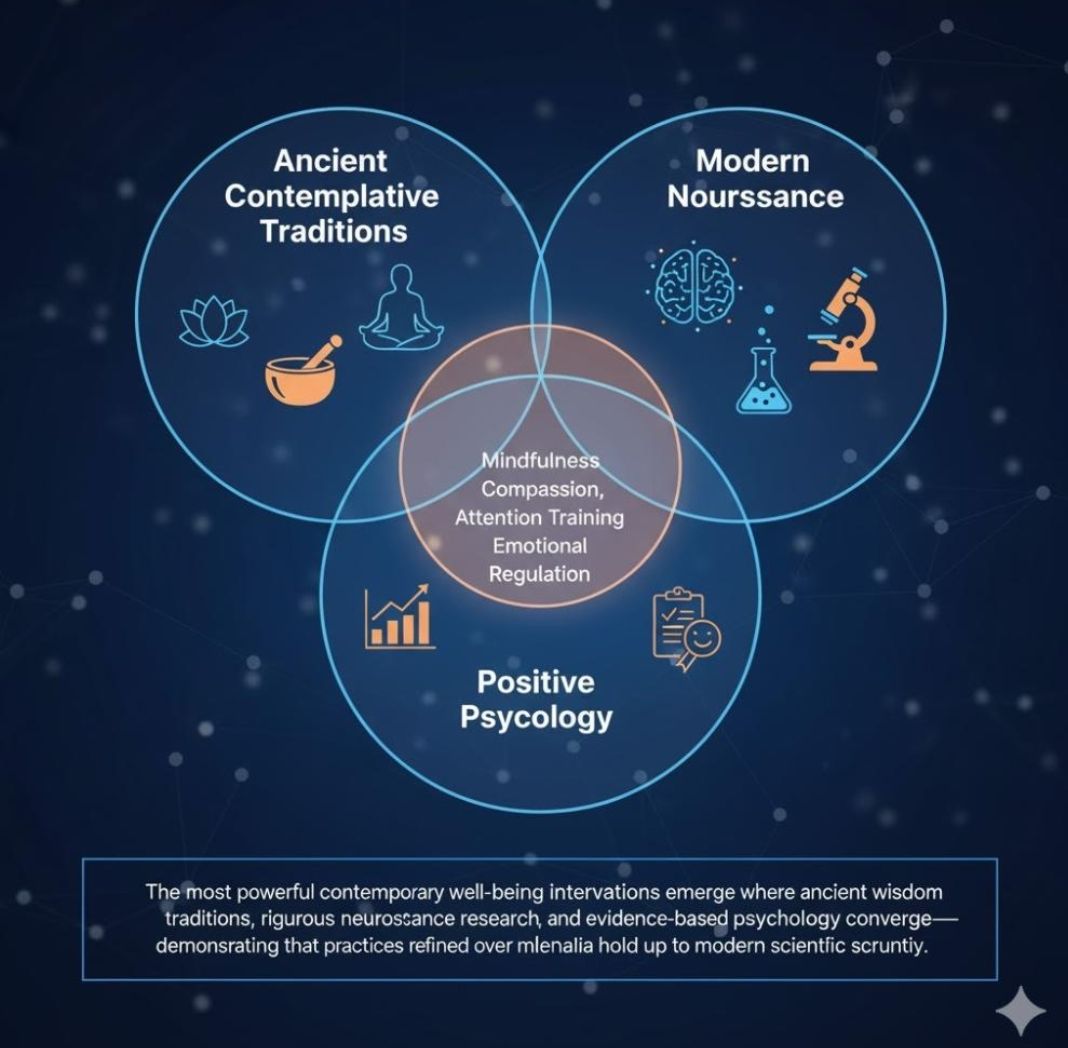
This review proposes a conceptual model organised around five interconnected dimensions.
Dimension One: Diagnostic Precision
Clinical assessment should distinguish persistent neurodevelopmental impairment from developmentally typical behaviour, environmental mismatch and other explanations for attention-related difficulties.
Diagnosis should be careful, contextual and proportionate to demonstrated impairment.
Dimension Two: Cognitive Individuality
Children should be understood as individuals with distinct strengths, difficulties, interests and developmental trajectories.
Variations in cognitive style should not automatically be interpreted as evidence of inferior intelligence or reduced potential.
Dimension Three: Environmental Adaptation
Educational and family environments should be evaluated for their capacity to support different learning and behavioural needs.
Where practical, adaptations should accompany individual interventions.
Dimension Four: Contemplative Self-Regulation
Age-appropriate practices derived from Indian contemplative traditions may be investigated as optional additions to evidence-based support.
Their implementation should depend on demonstrated benefits, acceptability, safety and individual preference.
Dimension Five: Psychological Dignity
Children should not internalise diagnostic descriptions as permanent judgements about their identity.
Evaluation should include self-esteem, perceived stigma, emotional well-being and participation, alongside clinical and academic outcomes.
This framework does not seek to replace medical diagnosis with spiritual classification.
Rather, it proposes that clinical science, developmental psychology, educational research and contemplative traditions can contribute distinct forms of knowledge to a broader child-centred approach.
12. Research Questions for Future Scientific Investigation
Several questions warrant rigorous interdisciplinary study.
First: To what extent do educational expectations, relative age and environmental demands influence ADHD identification and perceived impairment?
Second: How do diagnostic communication practices affect children’s self-esteem, identity, academic confidence and willingness to seek support?
Third: Can structured yogic interventions produce reproducible improvements in clinically meaningful measures of self-regulation and daily functioning?
Fourth: Are improvements associated with attentional training, stress reduction, social support, expectancy effects or other mechanisms?
Fifth: Can interventions informed by Indian contemplative traditions produce additional benefits when combined with established clinical and educational approaches?
Sixth: Do outcomes vary according to symptom severity, age, developmental profile, cultural background or individual preferences?
These questions should be examined through adequately powered trials, careful control groups, validated outcome measures and independent assessment.
Crucially, children already receiving beneficial evidence-based care should not be deprived of that support merely to test alternative approaches.
13. Limitations and Scientific Cautions
The interdisciplinary perspective advanced here has several limitations.
First, classical Indian models of cognition were developed within philosophical and contemplative traditions and cannot be directly equated with established neurological mechanisms.
Second, the relationship between evolutionary adaptation and specific ADHD-associated characteristics remains complex and should not be reduced to the assumption that every trait is advantageous.
Third, evidence concerning overdiagnosis does not establish that ADHD itself is a fabricated disorder.
Fourth, the current evidence for yoga and meditation as ADHD interventions remains insufficient to establish them as replacements for validated clinical approaches.
Fifth, diagnostic labels can produce benefits as well as harms. An accurate diagnosis may improve understanding, reduce guilt and facilitate access to support.
Finally, an emphasis on human potential must not create unrealistic expectations or imply that children who continue to struggle have failed to practise sufficiently.
A child experiencing persistent difficulties deserves compassion and effective assistance, regardless of whether those difficulties can be substantially modified.
These limitations are not reasons to avoid interdisciplinary research. They define the standards by which such research should be conducted.
14. Conclusion: Human Potential Beyond Diagnostic Categories
Indian philosophy has long explored the extraordinary depth of human experience and the cultivation of awareness, discernment and self-regulation.
Evolutionary biology demonstrates that variation and environmental context are central to understanding living systems.
Contemporary neuroscience, meanwhile, continues to investigate the complex biological and developmental mechanisms underlying human cognition.
These perspectives need not be in conflict.
The scientific challenge is to distinguish genuinely impairing neurodevelopmental conditions from ordinary cognitive variation while recognising that an individual’s difficulties do not exhaust their capabilities.
ADHD offers an important case for examining this challenge.
Existing evidence supports ADHD as a clinically meaningful condition. At the same time, research on overdiagnosis, developmental context and diagnostic labelling demonstrates that classification and treatment require careful application.
Classical Indian contemplative traditions offer potentially valuable conceptual resources for investigating attention, awareness and self-regulation, but their clinical applications require rigorous empirical validation.
The objective should not be to deny children’s difficulties, nor to convert every difference into a disorder. It should be to understand each child sufficiently well to provide appropriate support without diminishing their sense of possibility.
A diagnosis must never become a verdict on intelligence, creativity, character or human worth.
Science should identify impairment where impairment exists.
Medicine should alleviate suffering where suffering occurs.
Education should cultivate individual capability rather than demand unnecessary conformity.
And society should ensure that children are never made to feel guilty for the ways in which they learn, think, move or experience the world.
Not every restless mind is a disordered mind. Not every unconventional thinker requires correction. And no diagnostic label should define the limits of a child’s future.
The ultimate measure of progress will not be how many children we classify, but how effectively we help every child learn, flourish and realise their capabilities.
References and Further Reading
Peer-reviewed research
[1] Faraone, S. V., et al. (2021). The World Federation of ADHD International Consensus Statement: 208 Evidence-based Conclusions about the Disorder. Neuroscience & Biobehavioral Reviews, 128, 789–818.
[2] Kazda, L., Bell, K., Thomas, R., McGeechan, K., Sims, R., & Barratt, A. (2021). Overdiagnosis of Attention-Deficit/Hyperactivity Disorder in Children and Adolescents: A Systematic Scoping Review. JAMA Network Open, 4(4), e215335.
[3] Zhang, J., Díaz-Román, A., & Cortese, S. (2018). Meditation-based Therapies for Attention-Deficit/Hyperactivity Disorder in Children, Adolescents and Adults: A Systematic Review and Meta-analysis. Evidence-Based Mental Health, 21(3), 87–94.
[4] Holland, J., & Sayal, K. (2019). Relative Age and ADHD Symptoms, Diagnosis and Medication: A Systematic Review. European Child & Adolescent Psychiatry, 28, 1417–1429.
[5] Frisira, E., Holland, J., & Sayal, K. (2025). Systematic Review and Meta-analysis: Relative Age in Attention-Deficit/Hyperactivity Disorder and Autism Spectrum Disorder. European Child & Adolescent Psychiatry, 34, 381–401.
Clinical guidance
[6] National Institute for Health and Care Excellence (NICE). Attention Deficit Hyperactivity Disorder: Diagnosis and Management (NG87).
Classical Indian philosophical sources
[7] Bhagavad Gita, Chapter 6, Verses 34–35. Classical philosophical source concerning restlessness, sustained practice and non-attachment.
[8] Patañjali. Yoga Sūtras, particularly Sutras 1.2 and 1.12, and the sections concerning Dharana and Dhyana. Classical philosophical source; interpretations vary by commentary and translation.
Review classification: Critical interdisciplinary narrative review and conceptual proposal.
Evidence status: Synthesises selected published sources. It is not a systematic literature review, original clinical trial or demonstration of therapeutic efficacy.
Editorial and clinical note: The article is intended for scientific discussion and public education. It does not recommend discontinuing prescribed ADHD treatment or substituting contemplative practices for professional assessment and care.

